Traffic Frenzy: Road Jam
- 4.8
- Rating
- 5.00M
- Installs
- Free
- Price
 Analysis by App-foxy
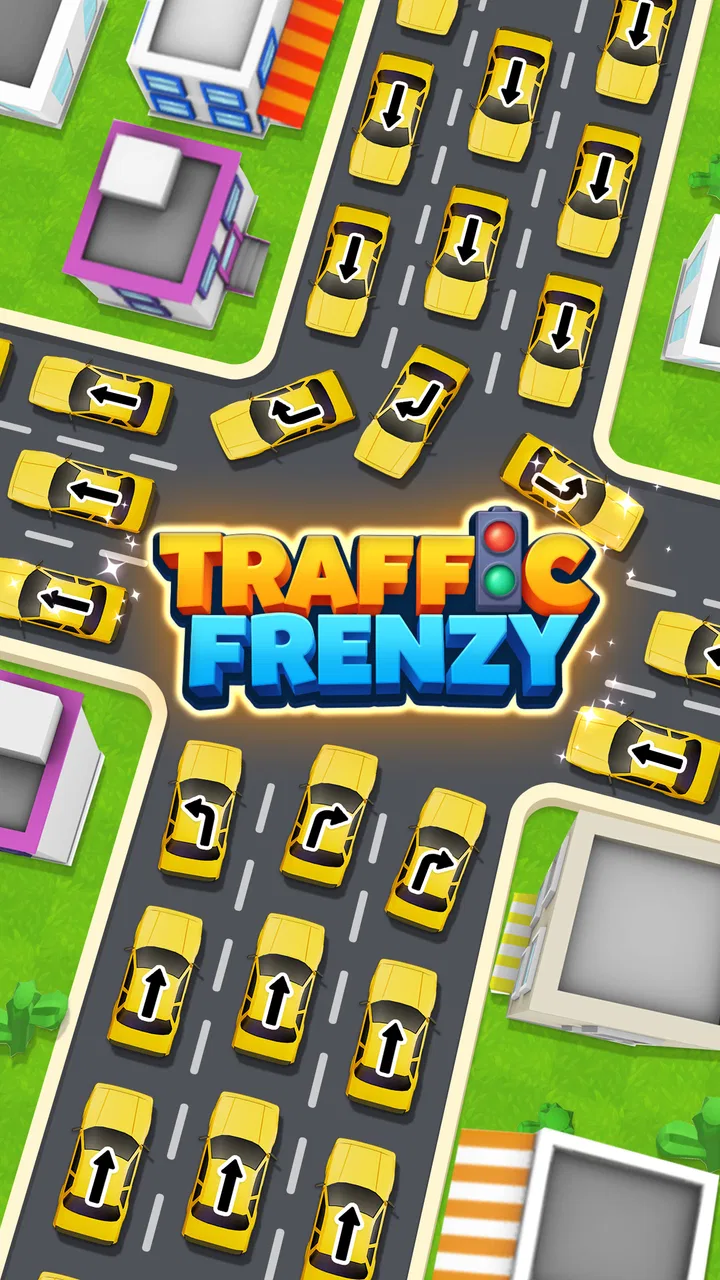
I spent time with Traffic Frenzy: Road Jam as a quick-play puzzle game, and my first impression was easy to understand: it looks simple, but clearing a crowded road requires more attention than the short sessions suggest. The central idea is to solve traffic jams by making sensible moves, turning a messy road layout into an orderly flow. That makes it a natural fit for anyone who enjoys compact puzzles that can be played in spare moments rather than games that demand a long uninterrupted session.
What I like most is the immediate readability. I do not need to learn a complicated story, manage a large collection, or understand a deep set of rules before starting. I can open the game, look at the vehicles and available routes, and begin thinking. That accessibility is a strong reason it works for a broad audience, including younger players and people who normally avoid demanding strategy games. Its Everyone content rating also matches that approachable presentation.
At the same time, I would not describe it as completely mindless. The early decisions may feel obvious, but crowded layouts punish careless movement. A vehicle that seems convenient to release can block another route or leave the board in a less useful arrangement. The enjoyable part is learning to pause for a moment, read the whole position, and then act instead of reacting to the first opening I notice.
You May Also Like

 Blood Strike: 2.5 Anniversary
Blood Strike’s Loadouts Turn Every Drop Into a Tactical Gamble
A close look at Blood Strike’s custom loadouts: how fast access to signature weapons reshapes its battle royale rhythm, rewards preparation, and narrows the gap between fights.

 Pandora - Music & Podcasts
Pandora’s Music Is Easy to Start, but Harder to Recover
Pandora’s strength is its low-effort path from a seed to a station. Its weak spot is how much confidence it asks you to place in connection, setup, and quiet recovery.

 8 Ball Pool
 Is Built on Rivalries, Rematches, and Routine
A close look at the rivalries, rematches, shared routines, and unanswered safety questions that turn a quick pool match into a persistent mobile community.

 Samsung Music
’s Quiet Strength Is Playing What You Already Own
Its reach comes less from spectacle than from dependable access to a personal library. That simplicity is both the app’s strongest retention engine and its ceiling.

 AccuWeather: Weather Radar
AccuWeather Review: A Quick, Clear Forecast for Everyday Decisions
For everyday plans, the best forecast is the one you can understand quickly. AccuWeather makes rain timing, radar, and local conditions easy to act on, with a few trade-offs.

 Hill Climb Racing
Why Hill Climb Racing Still Turns Crashes Into One More Run
A tiny car, a bumpy hill and one more upgrade: Hill Climb Racing keeps resurfacing because its simple chaos makes every near-miss feel personal.
More From Our News Desk
View All News


How I play a typical session
I treat a typical session as a brief chance to reset my attention: I scan the whole road, choose a move that opens useful space, and pause to reassess before continuing. That makes the puzzle easier to approach when I’m tired or interrupted, since I don’t have to hold a long plan in my head. The next question is how comfortably that routine translates across different ways of seeing and interacting.
A reliable starting routine
My baseline workflow is deliberately slow for the first few seconds. I scan the entire road before touching anything, identify which vehicles appear to have the clearest path, and look for pieces whose movement would open space for several others. This habit is more effective than simply moving the nearest vehicle because it keeps the overall traffic pattern in view.
When I am playing during a short break, I usually treat each puzzle as a small planning exercise rather than a reflex challenge. I make one move, check how the board changes, and then reassess. That rhythm prevents the common mistake of committing to a chain of moves based on an assumption that the first move will behave exactly as expected.
A useful practical rule is to prioritize space over speed. If two vehicles can move, I prefer the one that creates a wider opening or reduces congestion around the center of the board. This is not always the fastest-looking option, but it tends to leave me with more choices. In a puzzle game built around jams, preserving options is often more valuable than making the most visible move.
Why the simple controls still need discipline
The controls are easy enough for a new player to understand, which is one of the game’s strongest qualities. The challenge comes from using that simplicity carefully. Because the interaction feels direct, I sometimes catch myself moving too quickly. The game then becomes less about solving and more about correcting an avoidable mistake.
I found it helpful to separate observation from action. First I inspect the vehicles, exits, and blocked spaces. Only after that do I choose a move. This small pause makes the game feel calmer and also improves my results. It is especially useful when the board contains several apparently open paths that compete for the same area.
For an everyday example, I can see this working well on a commute or while waiting for an appointment. One short attempt gives me something engaging to do without requiring sound, a long setup, or a large amount of concentration. If I am tired, I can still enjoy the basic sorting challenge; if I am more alert, I can try to solve the same type of congestion with fewer wasted moves.
Settings I check before settling in
The first settings worth checking are the ones that affect comfort rather than performance. I look at sound and notification behavior, then adjust the game so it fits the place where I am playing. A quiet puzzle game is more convenient in shared spaces, while sound can make a longer home session feel more lively. I also pay attention to whether the visual presentation remains comfortable when I play for several rounds.
I do not recommend changing everything immediately. My preference is to play a few puzzles with the default setup, notice what distracts me, and then make only the changes that solve a real problem. This avoids spending more time configuring the game than actually learning its traffic patterns.
It is also sensible to review the purchase controls before handing the device to a child. The game is free to download and play, but it includes in-app purchases ranging from $0.99 to $99.99 per item. That range is important for families to understand. The age rating is Everyone, yet purchase awareness still matters whenever a game is available on a shared phone or tablet.
I would also check compatibility before installing it on an older device. The listed minimum operating system is Android 7.0, so users with a device below that requirement should not assume the game will run properly. On supported hardware, keeping the app updated is a sensible habit because the current version is 1.0.90, but I would still avoid updating immediately before an important trip if I depend on the game for offline entertainment and have not tested the new version.
Small habits that make solving faster
Experienced play is less about frantic tapping and more about repeating a useful inspection pattern. I start with the outer lanes, then check the middle, and finally look for vehicles that are acting as bottlenecks. This gives me a consistent way to read a busy layout. Without a routine, it is easy to focus on one vehicle and miss the move that actually unlocks the board.
Another helpful habit is to think one move beyond the obvious opening. If a vehicle can leave immediately, I ask what its departure exposes and which vehicle will benefit next. Sometimes the best move is not the one that clears the most visible space. It is the one that creates a sequence in which several later moves become simple.
I also try not to treat every available opening as urgent. A clear lane can remain useful for a moment, while a vehicle blocking several others deserves attention sooner. This distinction helps me avoid wasting a move on a harmless obstruction while a more important bottleneck continues to shape the whole puzzle.
When I make a mistake, I use it as information rather than restarting in frustration. I ask whether I misread the route, moved too early, or failed to notice that two vehicles depended on the same space. That reflection is one of the game’s better long-term qualities. Even a failed attempt can teach me how to scan the next board more effectively.
Patterns I use when the road becomes crowded
One pattern I rely on is opening a corridor before clearing individual vehicles. If several pieces are clustered together, I look for the move that gives the group room to separate. This often feels slower at first, but it reduces the chance of creating a new blockage after every action.
A second pattern is to protect the final route. I try not to fill or obstruct the area that appears likely to be needed near the end of the solution. Leaving that space available gives me a safety margin. It is particularly useful when the board looks nearly solved but still contains a few vehicles whose paths overlap.
The third pattern is to alternate between local and global thinking. I solve the immediate obstruction, then zoom out and inspect the entire road again. This prevents tunnel vision. A move that looks excellent from one corner of the board may be unhelpful when viewed alongside the remaining traffic.
These habits are more valuable than trying to play quickly from the beginning. Speed usually arrives after the layout becomes familiar. If I rush before understanding the structure, I create extra corrections. If I read the board carefully first, the later moves often become naturally faster.
Where the game starts to test patience
The main limitation is also central to the design: the experience depends on repeated traffic puzzles. If I want a story, character development, exploration, or a large strategic system, this is not the right choice. Its pleasure comes from arranging movement and relieving congestion, so players who dislike repetition may find the format narrow after the initial novelty fades.
I also would not choose it when I need a game with a clearly documented competitive layer or a long-term collection goal. Traffic Frenzy: Road Jam is better suited to focused problem solving than to building an identity around a persistent world. It can fill short gaps in the day, but it does not replace a deeper strategy title for players who want extensive planning across many systems.
The free entry point is convenient, although the presence of purchases means I would approach the game with a little financial awareness. I prefer to decide in advance whether I am willing to spend anything rather than allowing a moment of impatience to guide that decision. For a child’s device, I would make the purchase protections part of the setup routine.
Another trade-off is the balance between relaxation and concentration. The store summary presents the game as a way to solve jams and relax with puzzles, and that description fits my calmer sessions. However, a difficult arrangement can become surprisingly absorbing. Someone looking for a completely passive distraction may find that the game asks for more attention than expected, especially when several routes appear possible.
Who will enjoy it most
I would recommend it to players who like sorting, spatial reasoning, and short challenges with immediately understandable goals. It is especially suitable for someone who wants a puzzle game that can be picked up without studying a manual. The Everyone rating also makes it a reasonable candidate for families, provided adults remember that the game offers in-app purchases.
It is a good match for commuters, casual players, and people who enjoy improving their own decision-making. The game does not require me to remember a complicated narrative between sessions, so I can return after a day away and understand what I am doing. That makes it more forgiving than games whose appeal depends on maintaining a large, continuous routine.
I would suggest a different kind of puzzle game to anyone who prefers wordplay, number grids, story-driven mysteries, or strictly timed action. Those formats offer different rewards. Here, the satisfaction comes from seeing a blocked road become manageable through order and foresight. If that specific idea does not appeal to you, the clean presentation will not be enough to carry the experience.
How it compares with familiar puzzle alternatives
Compared with match-three games, this feels more deliberate and less dependent on creating chains or reacting to changing pieces. I spend more time reading relationships between vehicles and less time searching for a colorful combination. That makes it a better choice when I want a puzzle that rewards planning rather than quick pattern recognition.
Compared with classic sliding-block puzzles, the traffic theme makes the objective more immediately approachable. A traditional block puzzle can feel abstract, while a jammed road gives every move a clear visual purpose. The trade-off is that players seeking a mathematically strict, highly minimalist challenge may prefer the purity of a classic grid.
Compared with large brain-training collections, this game is more focused. I do not jump between unrelated exercises; I stay with the traffic-clearing concept and gradually improve my reading of crowded layouts. That focus is a strength for players who want consistency, but it can feel limited beside an app offering arithmetic, memory, vocabulary, and logic in one package.
My final assessment after learning its rhythm
Little Whale Game Limited has built a puzzle game that is easy to enter but difficult to play well without thought. The scale of its audience reflects that accessibility: it has a 4.8 average from around 94 thousand ratings and more than 5 million installs. Those figures do not change my personal experience, but they help explain why the game has broad appeal among casual puzzle players.
I appreciate that the core loop is understandable within moments, while better habits continue to matter after the first few sessions. Scanning the whole board, protecting future routes, opening corridors, and reviewing mistakes are practical techniques that make the game more satisfying. They also give the experience more substance than the short store description suggests.
My reservation is that the focused format will not suit everyone. The game offers a specific kind of enjoyment, and players who need narrative progression, extensive customization, or a wide range of puzzle types should look elsewhere. I would also keep the purchase range in mind and review the device requirements before installing it on older hardware.
For me, the best way to approach Traffic Frenzy: Road Jam is as a compact daily puzzle rather than an all-purpose game. I open it when I want a clear problem, a few minutes of concentration, and the satisfaction of turning disorder into a workable plan. If you enjoy calm-looking puzzles that reward careful sequencing more than frantic speed, this is an easy free game for me to recommend.
FAQs for Traffic Frenzy: Road Jam
01What is Traffic Frenzy: Road Jam?
Traffic Frenzy: Road Jam is a casual traffic-management puzzle game in which you control vehicles, organize busy roads, and try to prevent crashes or traffic jams. The gameplay is generally based on quick decisions, timing, and planning, making it easy to understand but increasingly challenging as more cars, intersections, and obstacles appear. It is designed for short, entertaining sessions on mobile devices.
02How do you play Traffic Frenzy: Road Jam?
The main objective is to guide vehicles safely through crowded roads while keeping traffic moving smoothly. Depending on the level, you may need to tap vehicles, manage lanes, avoid collisions, and choose the correct moment for cars to move. Later stages usually require faster reactions and better planning because several vehicles may approach the same area at once. Paying attention to traffic patterns is essential.
03Is Traffic Frenzy: Road Jam free to download and play?
Traffic Frenzy: Road Jam can generally be downloaded free of charge, although the exact availability and monetization options may depend on the Android or iOS version. Free mobile games commonly include advertising, optional in-app purchases, or both. Before downloading, check the store listing for current information about purchases, ads, supported devices, and whether any features or bonuses require payment.
04Does Traffic Frenzy: Road Jam require an internet connection?
Many levels in Traffic Frenzy: Road Jam may be playable without a constant internet connection, which is useful when traveling or when mobile data is unavailable. However, an internet connection may still be needed for advertisements, updates, cloud-related features, leaderboards, or in-app purchases. Offline behavior can vary between versions, so it is best to test the game after installation before relying on it without internet access.
05Is Traffic Frenzy: Road Jam suitable for children?
Traffic Frenzy: Road Jam is usually simple enough for children to understand because its controls and objectives are straightforward. Nevertheless, parents should review the age rating, advertising content, and in-app purchase settings before allowing younger players to use it. The increasing difficulty can also require patience and concentration. Activating parental controls is recommended if the device is shared with children.
Pros
- Simple controls make it easy to start playing immediately.
- Short levels fit well into quick gaming sessions.
- Increasing traffic density keeps the challenge engaging.
- Bright visuals make cars and obstacles easy to recognize.
- Works well for players who enjoy casual puzzle challenges.
Cons
- Later stages can feel repetitive once the core pattern is familiar.
- Mistakes may require repeating sections instead of quick recovery.
- Progress can feel slow without spending extra time in the game.
- The small play area may feel crowded on smaller phone screens.
- Players seeking deep strategy may find the mechanics too simple.

Traffic Frenzy: Road Jam
Gallery